
Posts and ground level
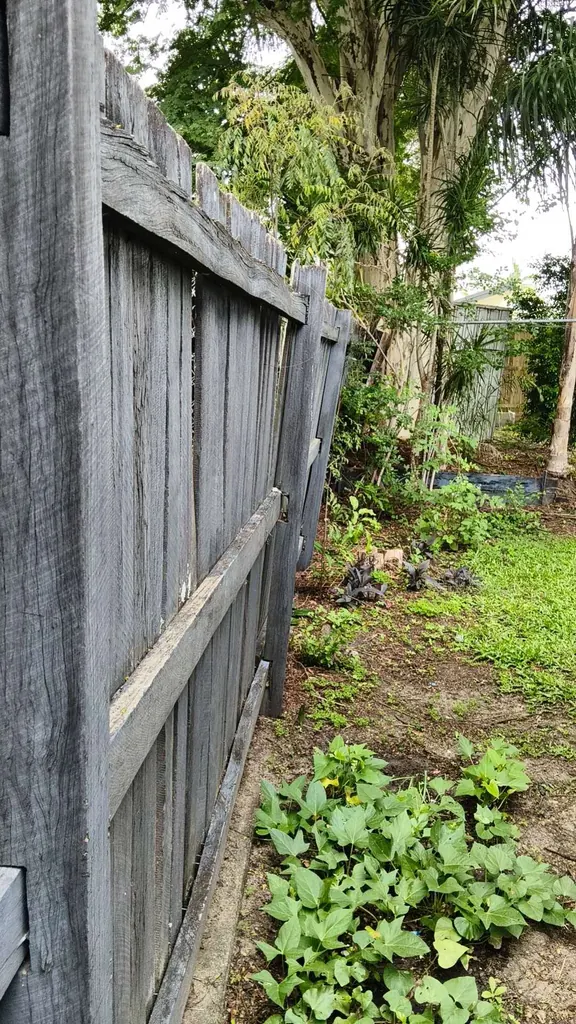
Note leaning posts, soft-looking bases, soil build-up and persistent damp. Photograph from safe access; do not push or load an unstable fence.
Residential timber work
What we can look at
We maintain timber fences, replace damaged palings, posts or rails, and repair the connections that keep the run in line. Sound sections are retained where practical, with access, removal and any preparation or exterior finish defined as part of the work.
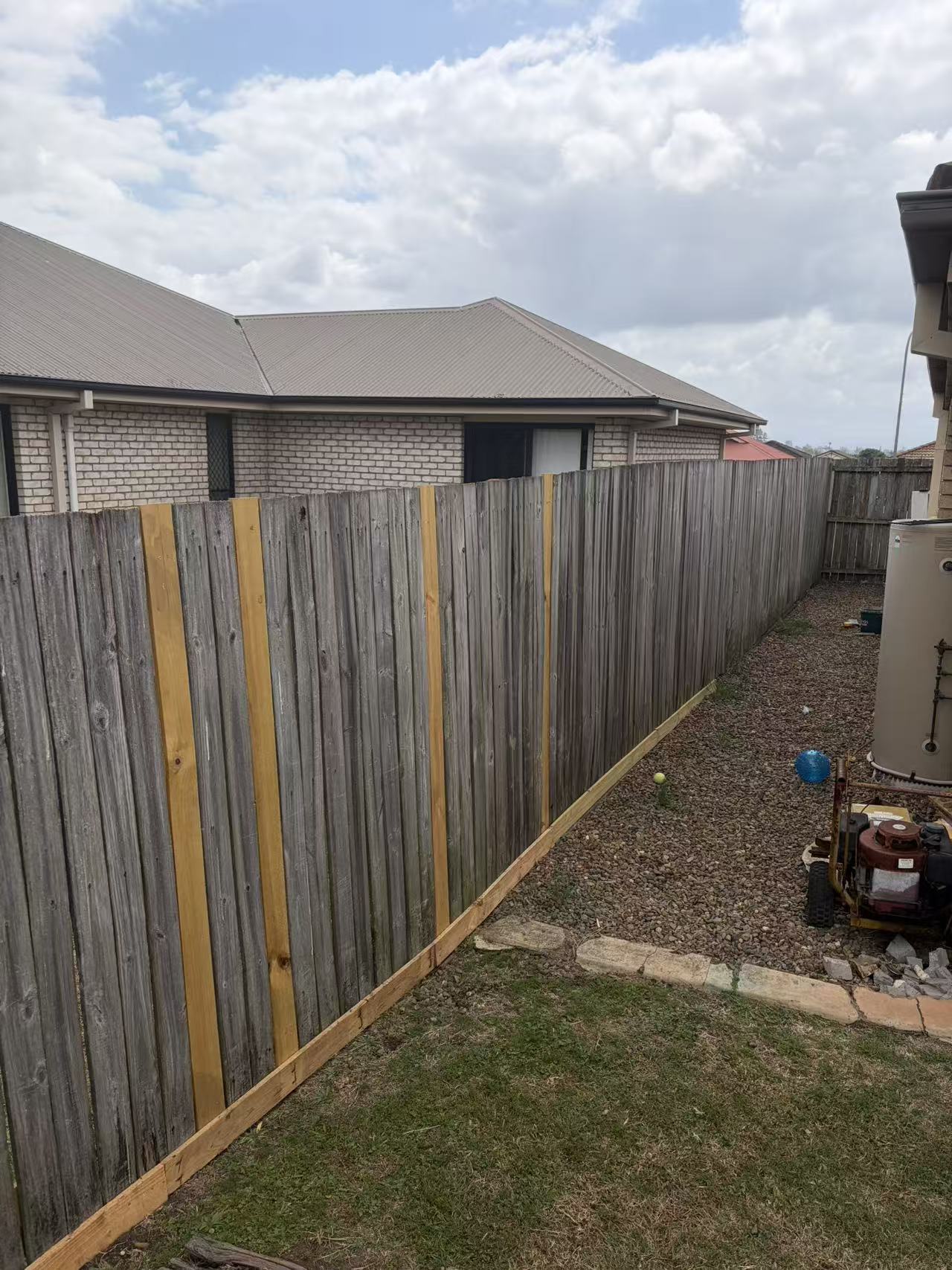
Mel One timber fence maintenance enquiries cover the condition of posts, rails, palings and fixings—not just how a fence looks. Tell us whether you want routine upkeep, help with a new fault or an assessment of an older fence.
Note leaning posts, soft-looking bases, soil build-up and persistent damp. Photograph from safe access; do not push or load an unstable fence.
Look for loose boards, split rails, gaps and rusty or missing fixings. Show the surrounding sound timber as well as the damaged part so the repair extent can be assessed.
Show peeling finishes, vegetation touching timber and debris near the base. Cleaning, preparation and any coating need an agreed scope; a fresh finish cannot make decayed timber structurally sound.
Upkeep is appropriate when the underlying timber and supports remain sound. A loose paling, failed fixing or isolated damaged rail may need a local repair. Multiple decayed posts, failing rails or an unstable run need assessment for section replacement rather than repeated cosmetic work.
After strong winds, heavy rain or a fallen branch, report any new lean or movement. Keep people and pets away from an unstable section. A dragging manual timber gate has its own hinge, latch and post assessment.
Timber gate maintenance and repairsThere is no single maintenance price for every fence. Length and height, access to each side, the number of posts or boards needing work, existing coatings, preparation and waste removal all affect scope. Separate upkeep, timber replacement and any agreed finishing in the quote so you can compare like-for-like work.
Send your suburb, approximate fence length, a full-run photo and close-ups of the affected parts. Mention shared-boundary access and whether you also need the adjoining gate checked. Availability and the work offered at your location are confirmed before booking.
Request a timber repair quoteWe check the loose or split palings against the rails and posts that hold them. Sound surrounding boards can be retained while failed boards and fixings are removed, matched as closely as practical and secured to usable timber. Board spacing, top line and the adjoining section are checked together. New fixings into a rotten rail do not resolve the original failure.
For a leaning post or failed rail, we check its base, connections and the load from the adjoining fence section. The affected section is protected and supported while necessary boards are removed for access. A replacement post or rail is fixed before retained palings are reinstated. Ground conditions, footings and neighbour-side access can change the method, so these are included in the repair scope rather than assumed from the fence face.
Maintenance starts with loose connections, ground-contact decay and water traps. When a finish is included, we protect nearby planting and surfaces, clean the timber, remove loose coating and prepare rough or repaired areas before the agreed exterior coating. Bare sections and cut ends are treated as required by the timber and coating system. Uncoated replacement timber and a fully refinished fence are different scopes; the final check includes the repaired run and cleared waste.
Loose palings, a soft post base, split rails and a fence that leans are different failures. The condition on both sides of the boundary and the length of the affected run matter, particularly when removal and access are part of the job.
A single post or rail can sometimes be replaced while keeping sound panels. Repeated failing posts or widespread decay may make a longer section more practical. Discuss boundaries and neighbour access with the relevant owners before work is arranged.
This is timber fencing, not Colorbond, glass pool fencing or powered gates. Boundary ownership and cost sharing are matters for the parties and applicable advice, not a legal conclusion from a website. New full-fence installation requires separate scope approval.
Tell us which fence area is loose, leaning or damaged. We check the posts, rails, boards, access and ground conditions, then explain timber matching, removal and any neighbour-access arrangements needed for the quote.
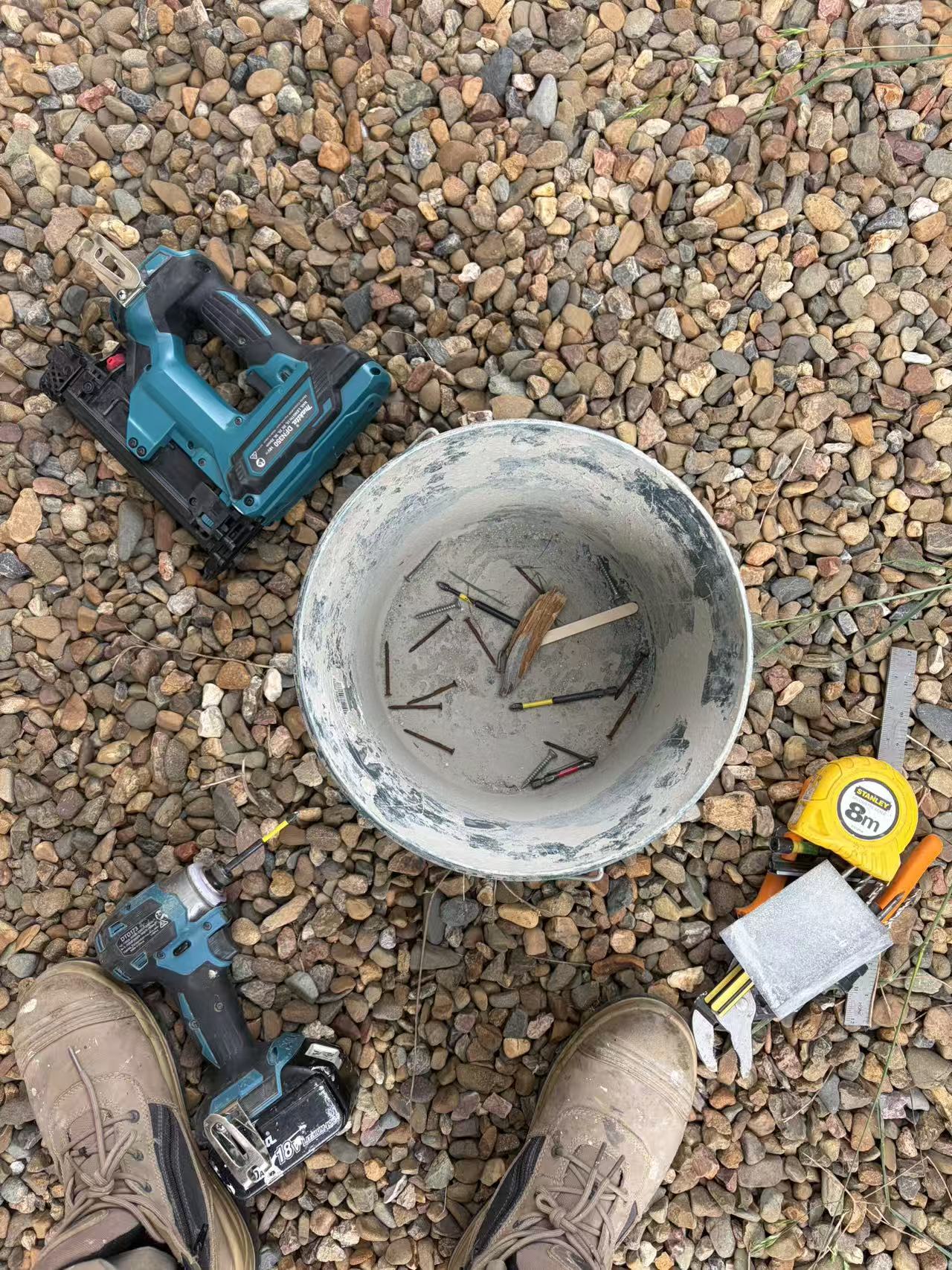
The fence overview shows vertical boards and a lower timber strip. Separate close views show individual fixings, a tool against the boards during work, and weathered timber with visible screws. These are fence-working details from different views, useful for showing the surfaces and connections we assess.

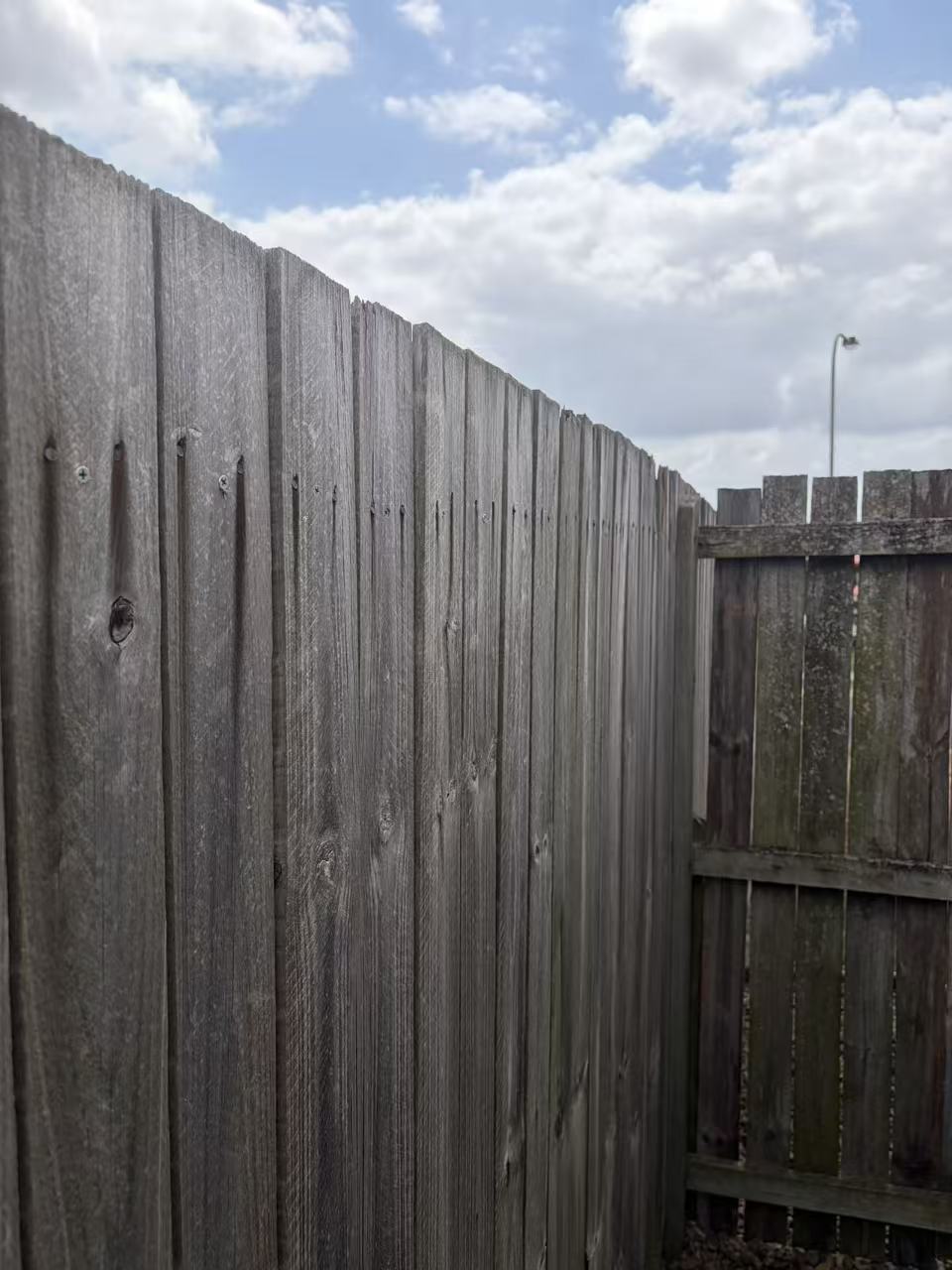
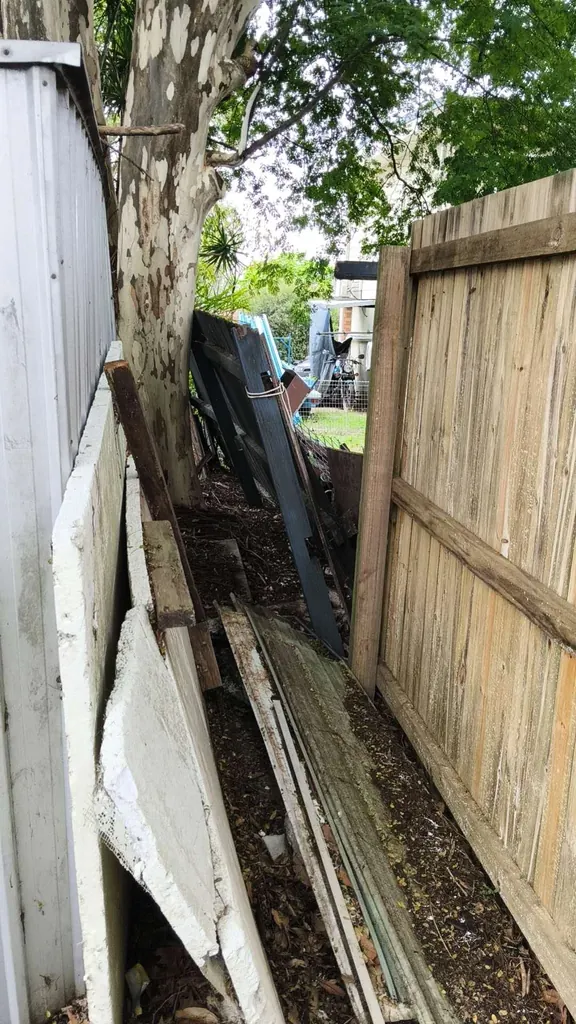
A long run of fence visibly leans. The close view shows where the boards meet the horizontal rails. Another view shows the narrow access between fence runs.
When a whole section leans, we check which posts are moving, what the post bases are like and whether the rails still hold the boards. A loose board may only need a small repair. Several failed posts or rails can make replacing the affected run the more practical quote. Access to both sides also affects what can be done.
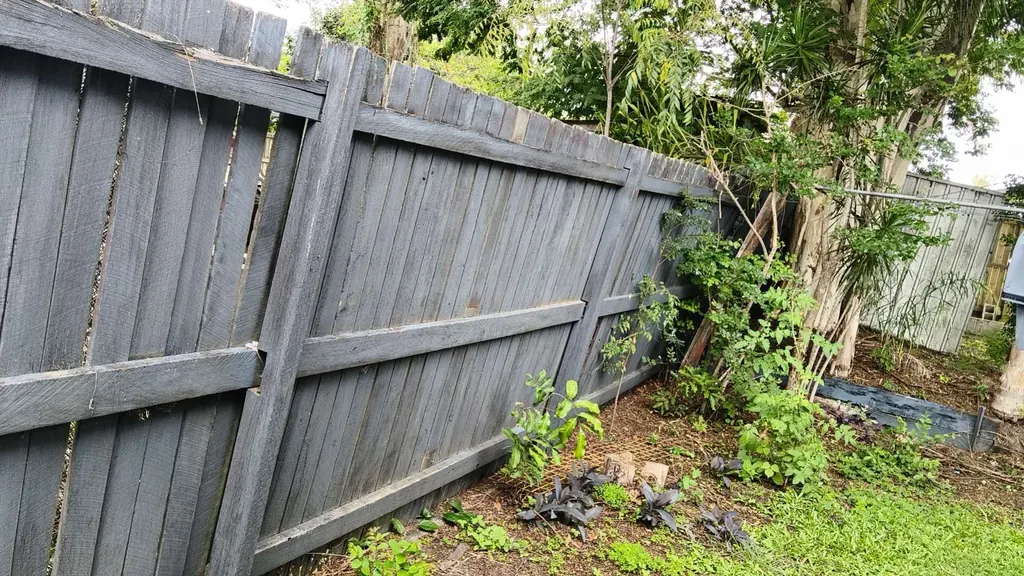
The site video shows weathered timber panels between brick posts and a gap where one panel meets a post.
Check whether the timber rail and its fixings can still hold the panel. The repair may be at the connection, or the panel may need replacement if the rail has failed. A moving or cracked brick post needs its own assessment before fixing anything to it.
We take residential timber enquiries in Sydney and the selected Central Coast, Illawarra and Wollondilly locations listed in our service directory. Tell us your suburb and the work needed; we will discuss scope, access, timing and any travel charges before arranging a visit.
Find your service locationOften a sound surrounding run can be kept, but the footing and rails must be checked.
Removal and disposal should appear explicitly in the quote.
Both sides and any neighbour access need confirming before scheduling. The method can affect the scope; confirm boundary arrangements as well.