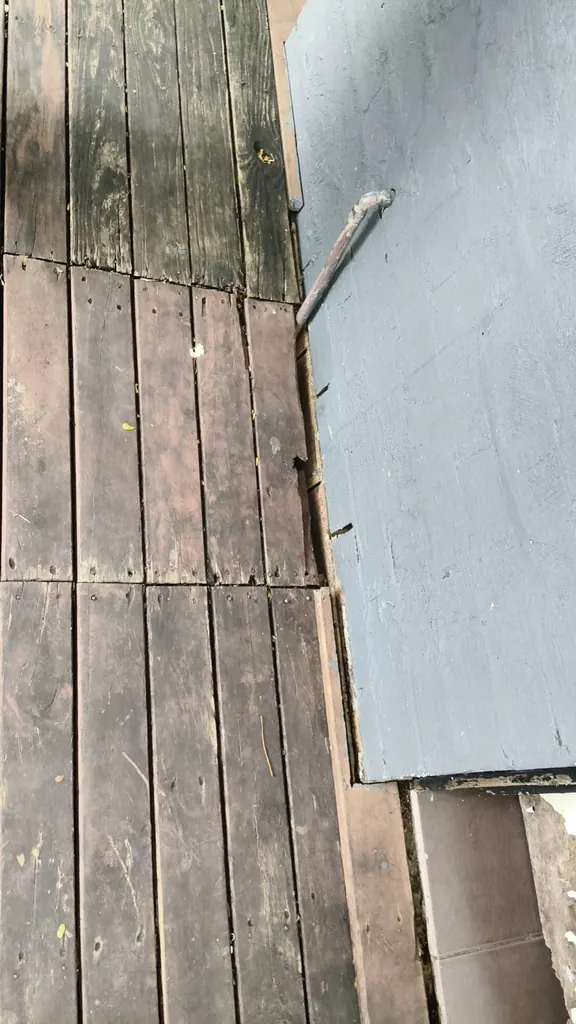
We repair timber decks by checking damaged boards together with their supports and fixing points. Local board replacement, loose connections and an optional surface refurbishment are separate work, so a fresh finish does not cover unresolved decay or movement.
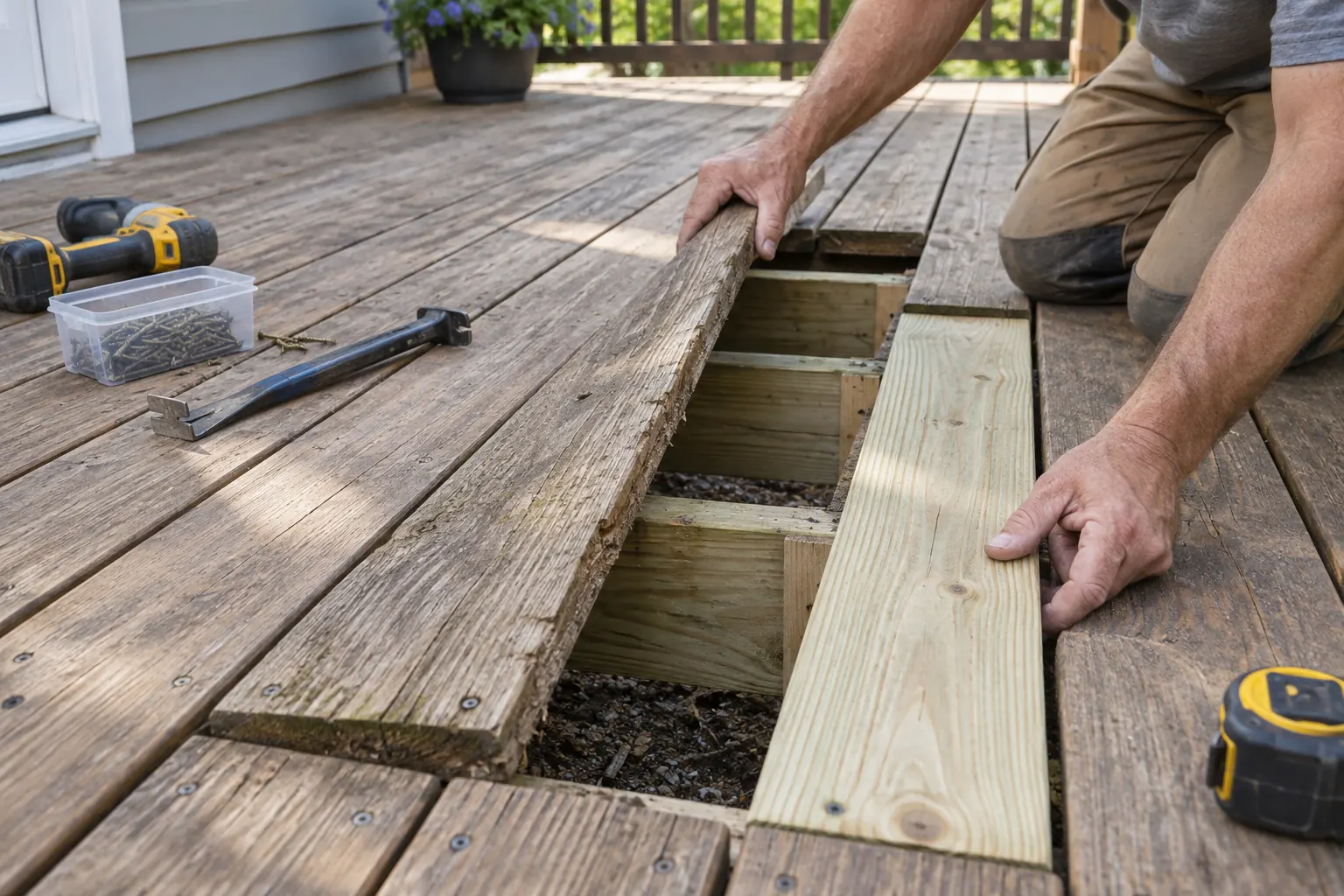
We check each affected board with its span, ends and the support beneath it before removal. A local replacement retains sound neighbouring material, matches the usable profile and is set out with the spacing required by that timber or decking system. Raised heads and loose boards are checked for damaged fixing points, board movement and deterioration in the supporting timber; we replace or refix only where the retained support can hold the connection — an oversized screw is not a remedy for rotten timber. The work area is kept out of use while boards are open, and removal and disposal of failed boards are included in the agreed scope.
Supports, connections and the frame below
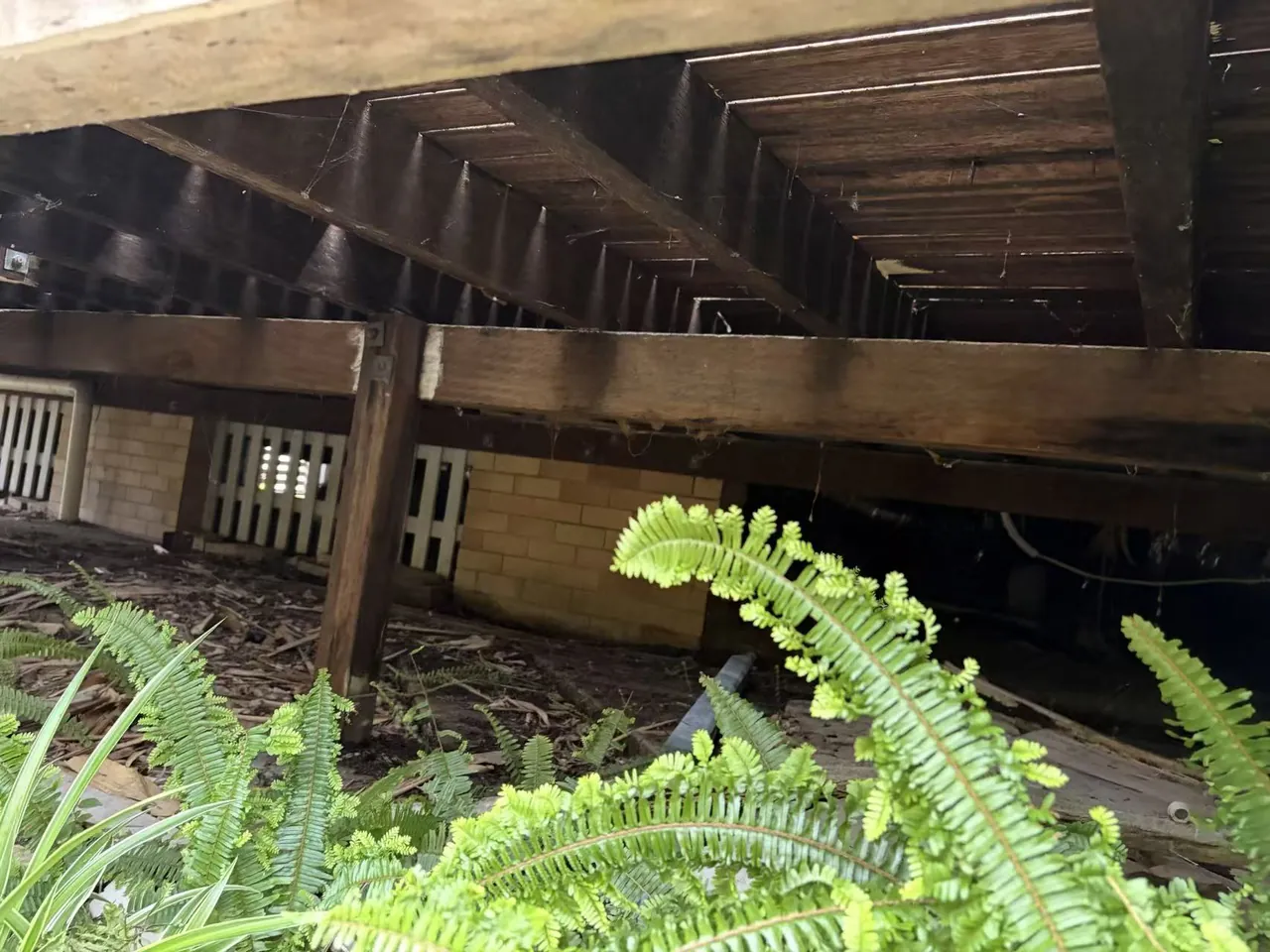
We distinguish deck boards from joists, bearers, posts and the ground or drainage below. Replacing boards alone is suitable only where the retained support and fixing points are sound. Bounce, extensive softness or movement at a rail may point below the surface; connections at deck rails or balcony handrails are checked separately from the walking surface. Where joists, bearers or posts have failed, the job changes beyond new surface boards: we assess what can be repaired within our carpentry scope and confirm it in writing. Load-bearing frame changes, balustrade compliance, composite systems, waterproofed decks and full rebuilds need their own assessment and qualification boundaries, and we say so before quoting. Persistent pooling, wet wall junctions or enclosed moisture are assessed before new boards or a finish are installed.
Sanding and surface refurbishment after repairs
When surface refurbishment is included, timber repairs and moisture or drainage problems come first. We protect adjacent walls and planting, clean the deck, remove unsound finish and prepare repaired boards for the chosen compatible deck coating. Sanding, bare-wood treatment and coating depend on the existing finish and product instructions; paint, stain and oil are not interchangeable defaults. Before return to use, we check board fixing, exposed edges and the stated coating conditions.
Comparing the three repair types
Repair type
What we check
Material matching
Removal & disposal
Return to use depends on
Local boards & refixing
Board spans, ends, fixing points, support beneath
Usable profile; spacing for the timber or decking system
Failed boards removed and disposed within the agreed scope
Splintering boards, raised fixings and local decay can sometimes be dealt with board by board. Bounce, extensive softness or movement at a rail may point below the surface. Keep off any unstable area and describe it from a safe position.
Scope and boundaries
Cleaning, sanding and oiling alone are a finishing job, quoted only when specified. Never remove boards for a quote photo — describe the deck from a safe position and we assess the rest. Keep off any area that feels unstable.
What shapes a quote
Tell us where the deck is damaged or feels loose, from a safe position, and your suburb. We assess the boards, accessible supports, timber matching, access and disposal, then confirm a written scope covering board or member replacement and refixing; matching timber and fixings; removal and disposal of failed material; protection and any agreed sanding, treatment and coating; and access arrangements while the deck is out of use. Factors that affect return to use — open supports, coating conditions and weather — are explained before work is scheduled.
Real case photos: a weathered deck checked board by board
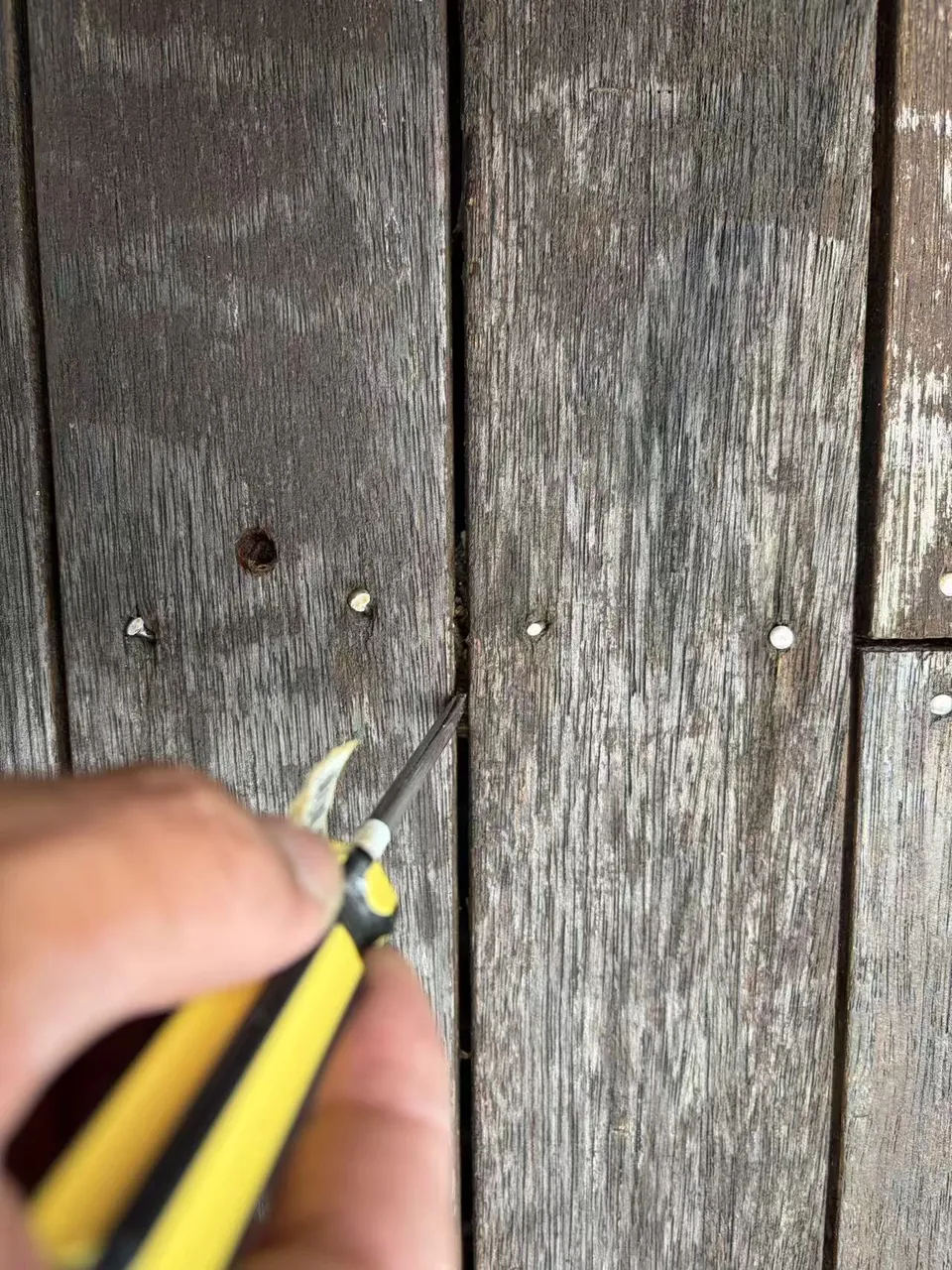
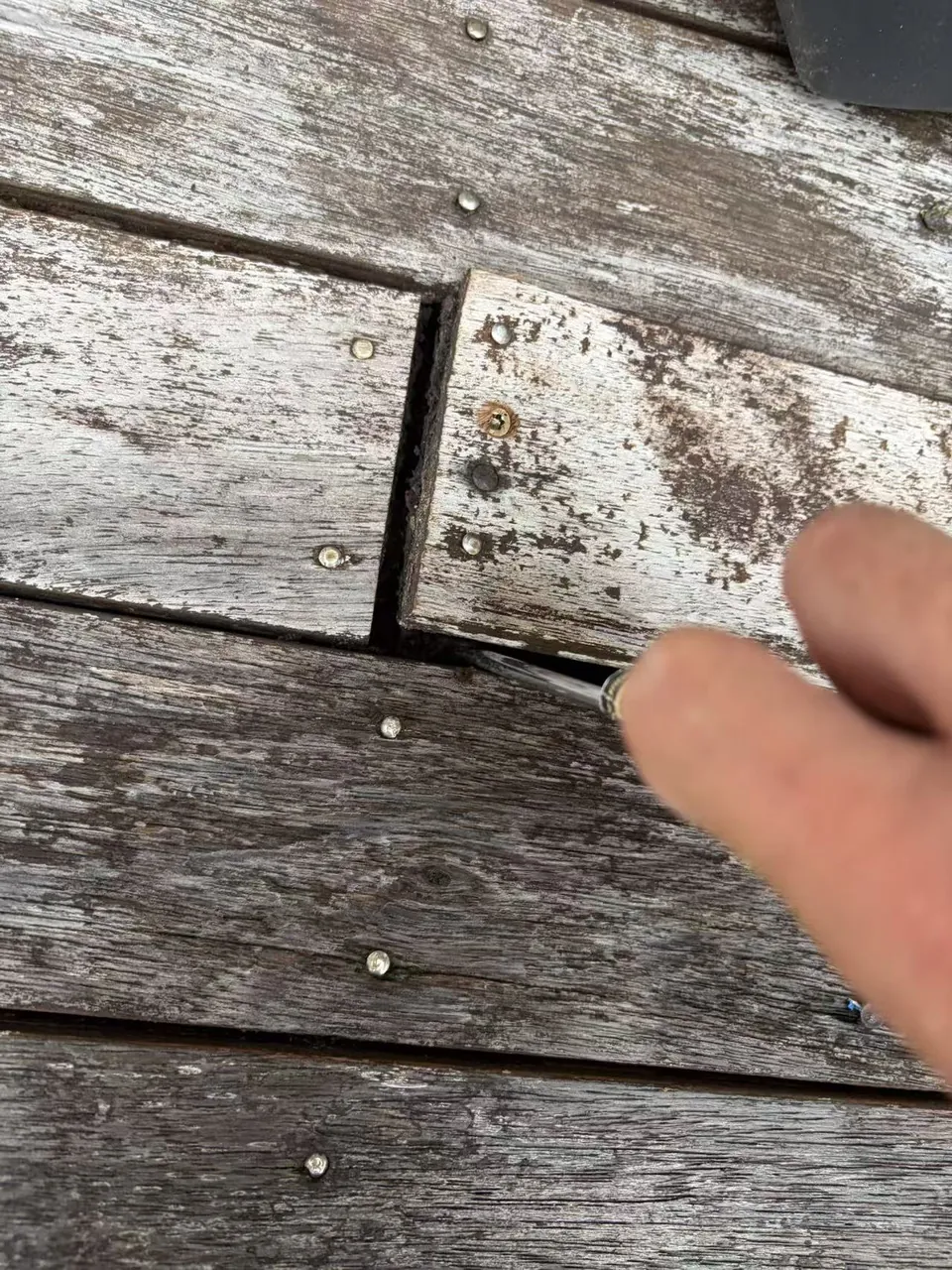
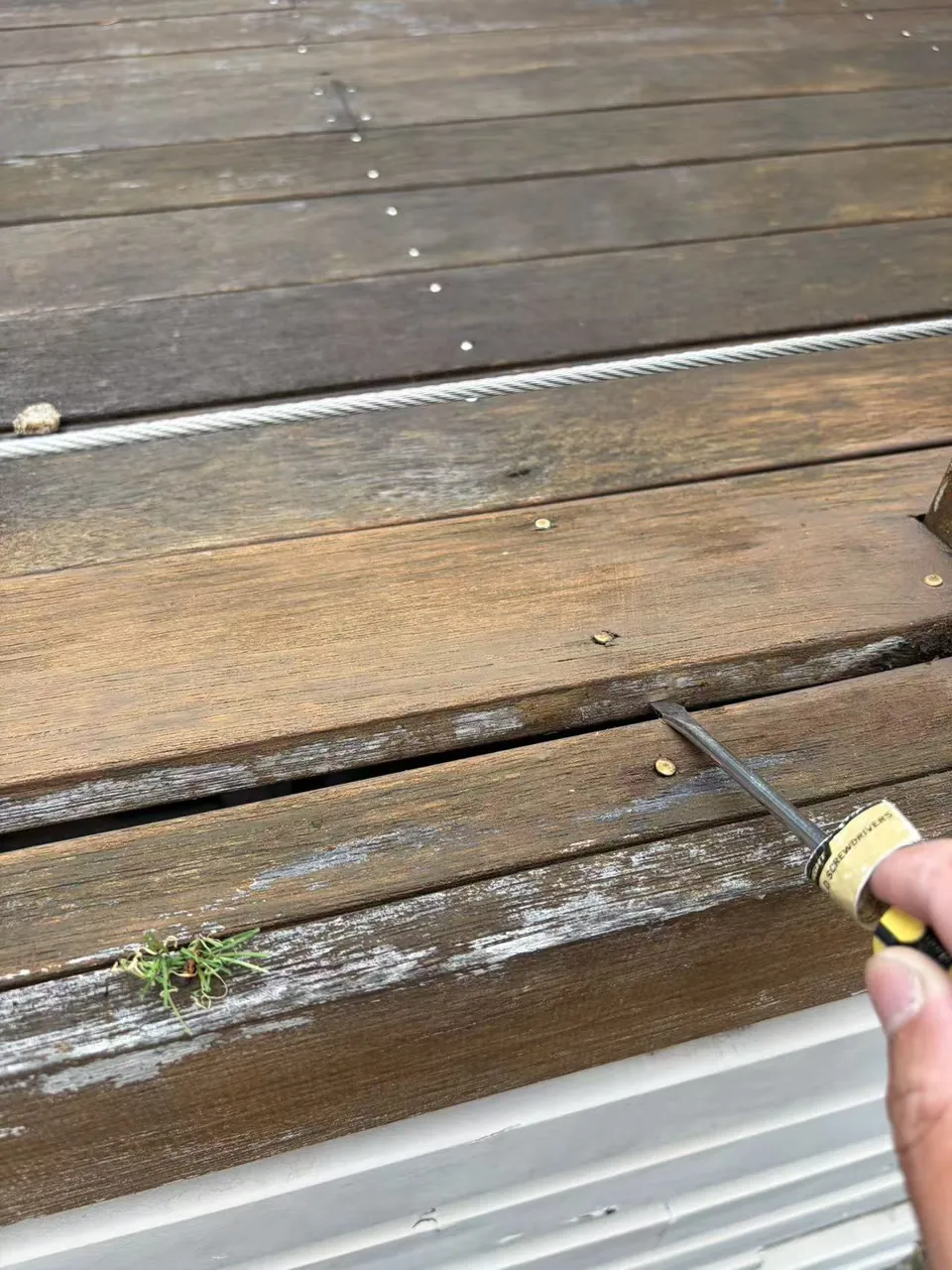
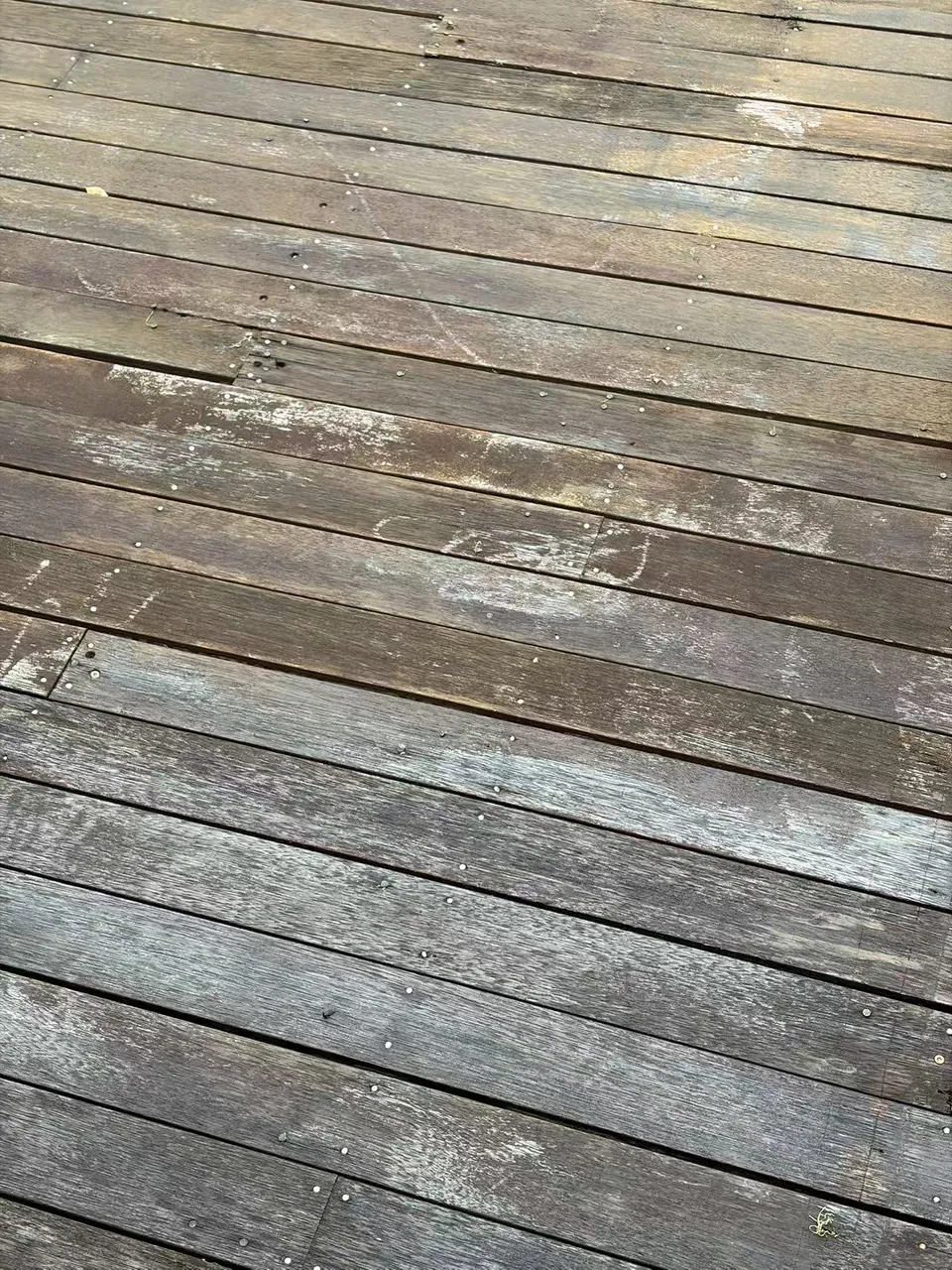
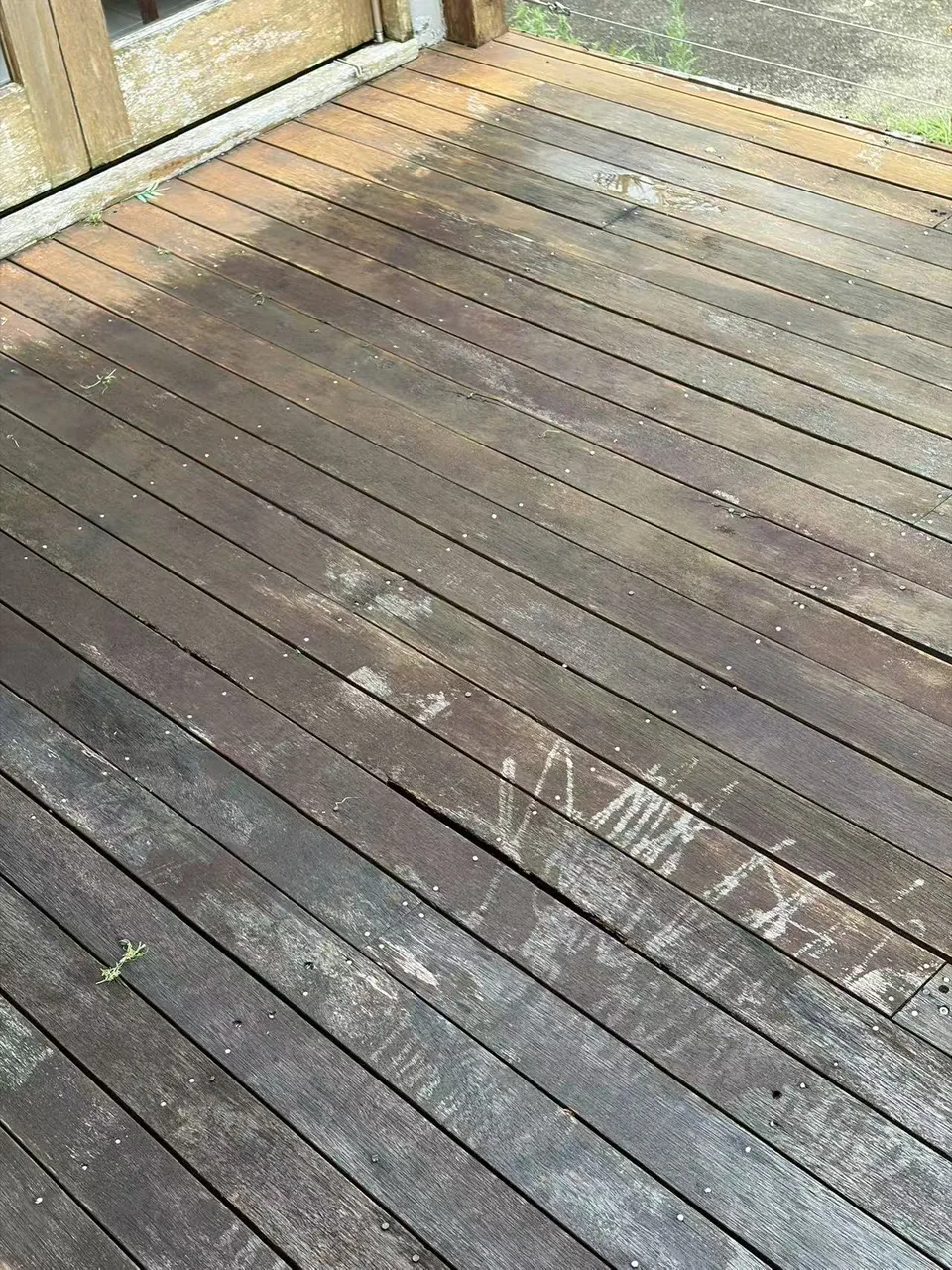
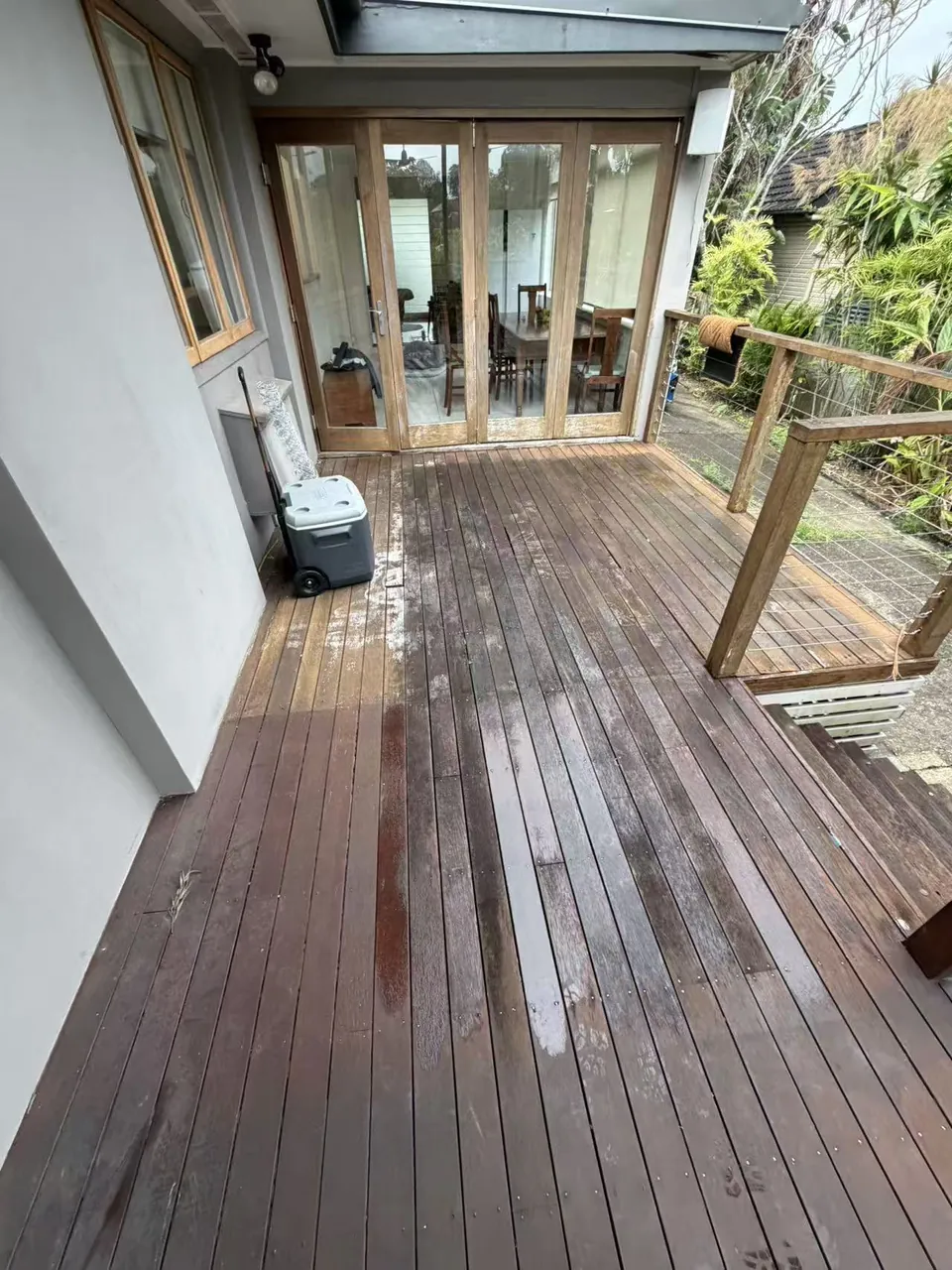
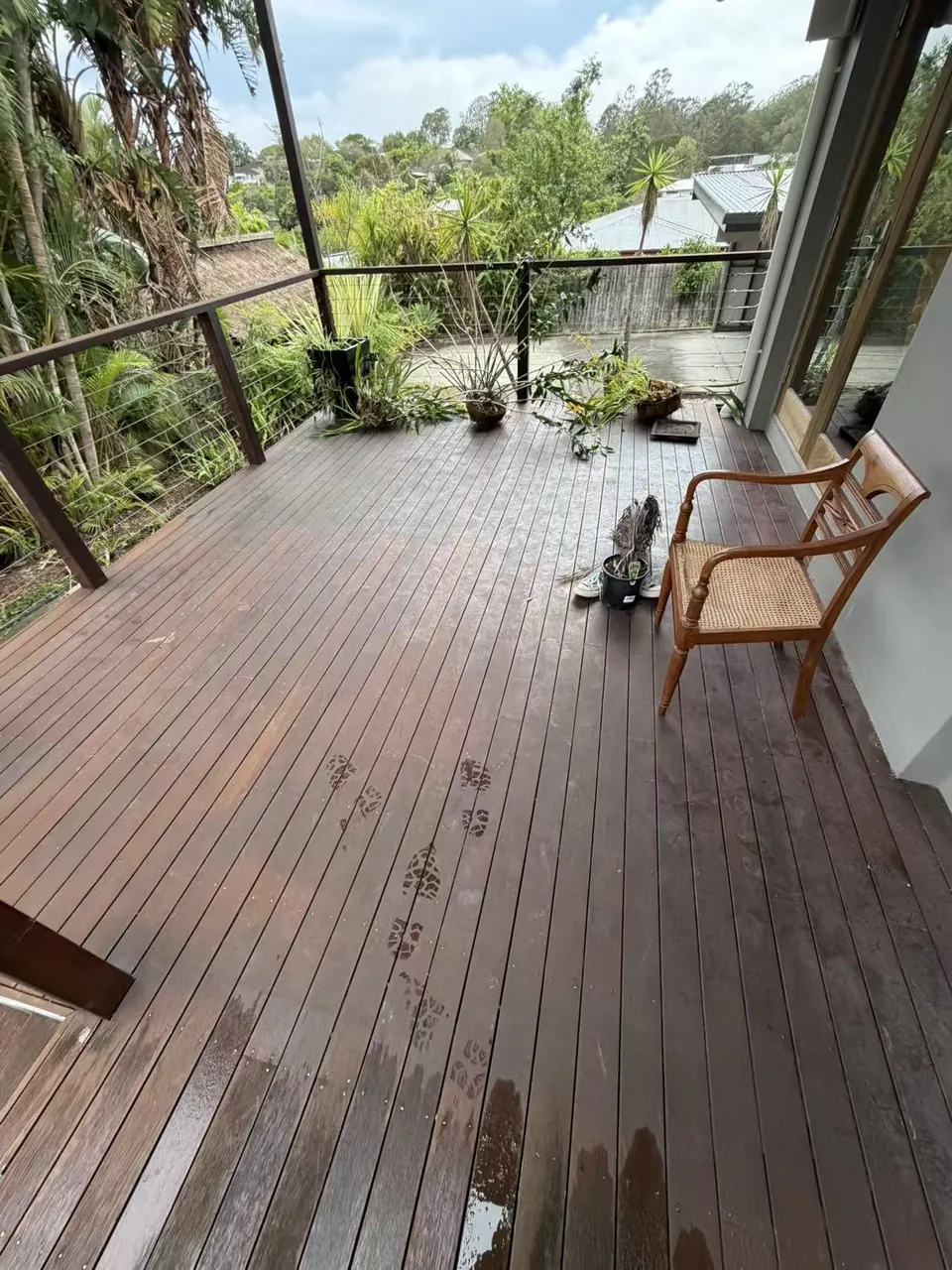
These site photos follow one timber deck through a condition check: a probe at open board gaps and a board end, the stair edge, the weathered surface and the threshold beside the doors, then wider views of the deck and the bearers, joists and posts below. Damp patches and footprints are from rain or cleaning, not a new coating. The set records what was checked; board replacement, framing repair and any sanding or oiling are agreed as separate part of the scope.
Board gap and fixing checkBoard end and joint checkStair-edge board checkSurface wear across the fieldThreshold and door junctionDeck, doors and stairBalustrade and garden sideSupports below the boards
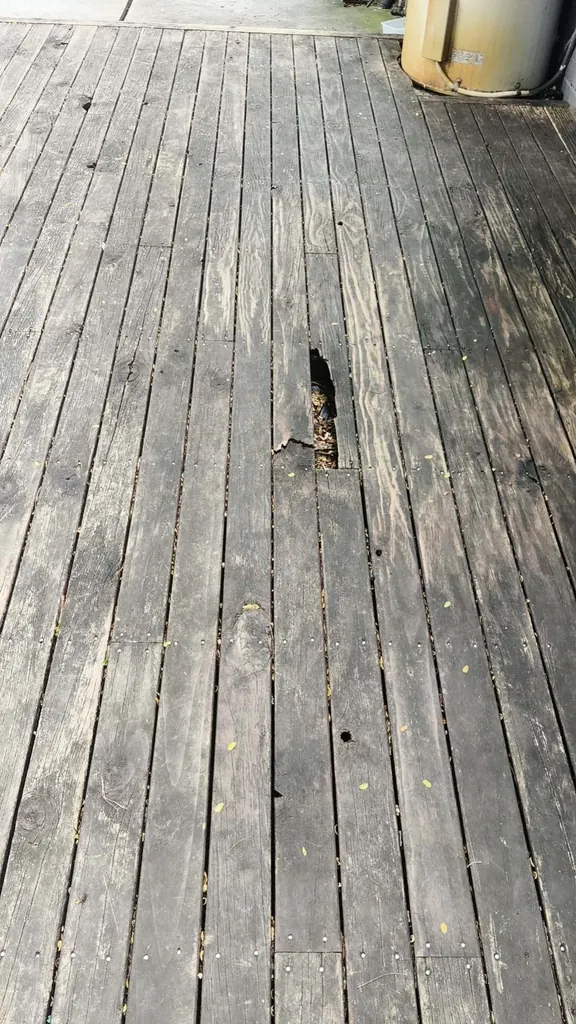
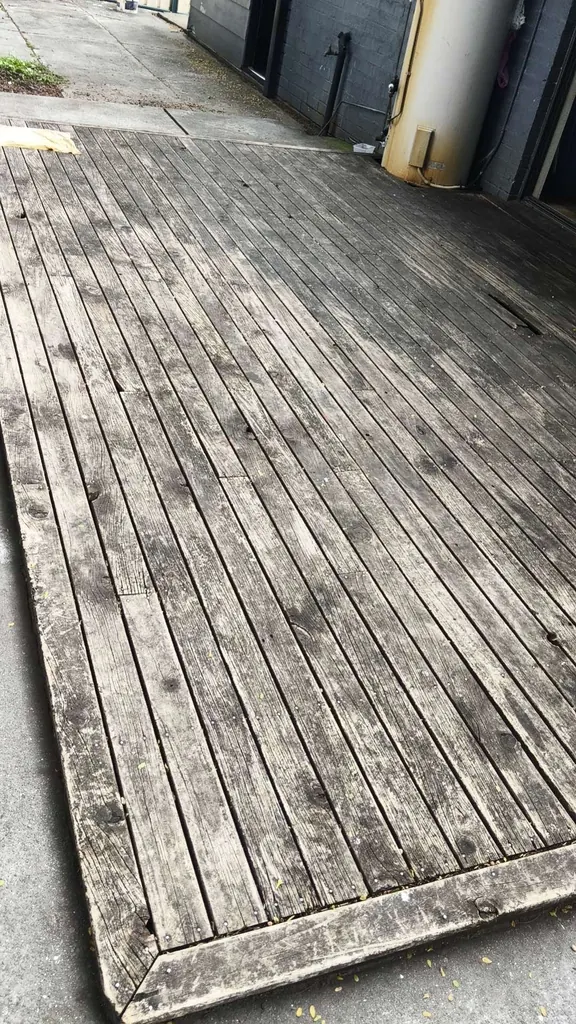
One deck board has broken through. The wider photo shows wear on the other boards, and a closer photo shows how the deck meets the wall and doorway.
Keep people off the broken area until the board and the timbers underneath can be checked. If the supports are sound, it may be possible to replace a few boards. Soft or loose supports mean the repair needs to go deeper. Sanding or oiling can be considered once the walking surface and its supports are sound.
Hole through a timber deck boardWider view of the weathered deck boardsDeck boards beside the wall and door threshold
Check the location
We take residential timber enquiries in Sydney and the selected Central Coast, Illawarra and Wollondilly locations listed in our service directory. Tell us your suburb and the work needed; we will discuss scope, access, timing and any travel charges before arranging a visit.